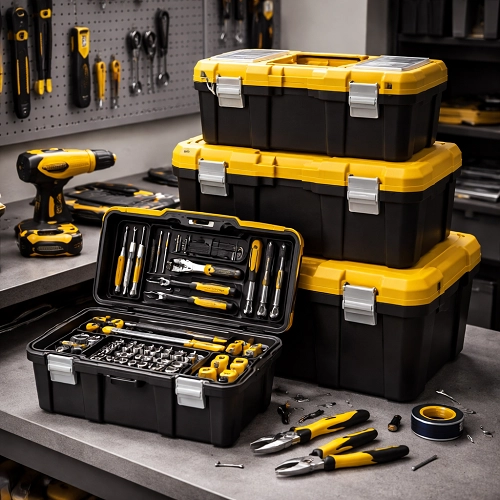
In a world increasingly driven by technology and structured learning, the value of hands-on, imaginative play remains as vital as ever. Among the many toys designed to nurture creativity and practical skills, plastic toolbox sets stand out as a timeless favorite. These colorful, portable kits are more than just toys—they are gateways to problem-solving, role-playing, and early skill development.
Plastic toolbox sets are toy kits designed to resemble real-life toolboxes, typically filled with child-safe versions of tools such as hammers, screwdrivers, wrenches, pliers, and screws. Made from durable, lightweight plastic, these sets are crafted specifically for young hands, ensuring both safety and usability.
Often designed with vibrant colors and interactive features, some sets include battery-powered drills, nuts and bolts that can be assembled, or even mini workbenches. They cater to a wide age range, from toddlers just beginning to explore motor skills to older children engaging in more complex pretend play.
Children naturally mimic the world around them. With a plastic toolbox set, they can step into the role of a builder, mechanic, or engineer. This type of pretend play helps children understand everyday tasks and builds confidence as they “fix” things around the house.
Using toy tools requires gripping, twisting, and coordinating hand movements. Activities like turning a screwdriver or fitting pieces together enhance dexterity and hand-eye coordination, which are essential for writing and other daily tasks.
Plastic toolbox sets subtly introduce foundational concepts in science, technology, engineering, and mathematics (STEM). Children learn about cause and effect, spatial awareness, and basic mechanics through hands-on interaction.
Whether assembling parts or figuring out how to “repair” a toy, kids are constantly challenged to think critically. These small challenges foster persistence and logical thinking.
When shared with friends or family, toolbox sets become tools for collaboration. Children learn teamwork, communication, and the joy of shared accomplishment.
Modern plastic toolbox sets are designed with both fun and function in mind. Key features often include:
When selecting a plastic toolbox set, consider the child’s age and interests. Younger children benefit from larger, simpler tools, while older kids may enjoy sets with more pieces and mechanical functions. Durability and ease of use are also important factors, especially for frequent play.
Plastic toolbox sets may seem simple, but their impact can be profound. By blending play with practical skill-building, they help lay the foundation for creativity, independence, and curiosity. In a child’s hands, a toy hammer isn’t just for play—it’s a step toward understanding how the world works.
In the landscape of modern toys, plastic toolbox sets continue to hold their ground as educational, engaging, and endlessly entertaining. They empower children to explore, build, and imagine—all while having fun. Whether used alone or with others, these sets prove that sometimes, the simplest tools can build the strongest skills.