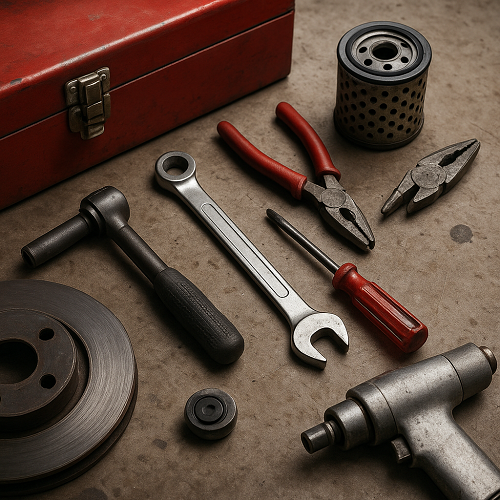
In the ever-evolving world of automotive repair, having the right tools is not merely a matter of convenience — it’s a matter of precision, safety, and professional efficiency. Whether you’re a seasoned mechanic working in a full-service garage or a dedicated enthusiast performing DIY maintenance at home, the quality and variety of your auto repair tools directly influence the outcome of every task. From simple hand wrenches to sophisticated diagnostic scanners, modern vehicles demand specialized instruments capable of handling advanced technologies, complex mechanical systems, and sensitive electronic components.
Hand tools are the cornerstone of every mechanic’s toolkit. Despite the surge in digital diagnostics and power tools, manual precision remains irreplaceable for many repair and adjustment tasks.
A common problem arises when technicians neglect torque calibration. Over time, torque wrenches can lose accuracy due to spring fatigue or poor storage conditions. Professionals should recalibrate torque wrenches every 5,000 cycles or six months to maintain precise readings.
For tasks that demand speed and force, power tools — particularly pneumatic (air-driven) systems — dominate professional garages.
Pneumatic systems require precise air pressure regulation (typically 90–120 psi). Overpressure can cause tool wear, while low pressure reduces torque and efficiency. Regular maintenance of air compressors — draining moisture, checking oil levels, and replacing filters — prevents corrosion and performance degradation.
Modern vehicles rely heavily on onboard computers, sensors, and electrical networks, making diagnostic tools indispensable.
One of the major challenges is software compatibility. Many advanced vehicles, especially hybrids and EVs, use proprietary diagnostic protocols. Without updated software or manufacturer-specific adapters, even the most advanced OBD-II scanners can fail to interpret data correctly. Technicians must regularly update their diagnostic tools to maintain full functionality across diverse vehicle models.
Safety in automotive repair begins with stable lifting and support systems. Incorrectly supported vehicles can cause catastrophic accidents.
A frequent problem is hydraulic fluid contamination, which can lead to sluggish performance or sudden pressure loss in lifting systems. Regular inspection for leaks, air ingress, and fluid quality is critical. Using manufacturer-approved hydraulic oils prevents seal damage and ensures consistent lift operation.
Certain repair jobs — particularly those involving the engine, transmission, or timing system — require precision instruments tailored to specific makes and models.
A recurring challenge is inaccurate readings from worn or low-quality instruments, particularly compression testers. Cheap tools with poor sealing or inaccurate gauges can lead to false diagnoses. Investing in high-quality, calibrated tools is essential for reliable engine analysis.
Even the best tools degrade over time if not properly maintained. To ensure longevity and reliability, mechanics should adopt a preventive maintenance schedule for their toolsets.
Environmental factors such as temperature and humidity can alter measurement accuracy. Torque wrenches, for example, perform best between 18°C and 25°C (64°F–77°F). Storage outside this range may require recalibration before use.
With the rise of electric vehicles (EVs) and advanced driver-assistance systems (ADAS), the next generation of auto repair tools will integrate more software-based diagnostics, laser calibration systems, and high-voltage safety equipment.
As technology advances, mechanics will need continuous training and updated equipment to keep pace with the increasingly digital automotive ecosystem.
The world of auto repair tools extends far beyond wrenches and screwdrivers — it’s a sophisticated network of precision instruments, mechanical aids, and electronic systems that together ensure vehicles perform safely and efficiently. Technical issues such as torque inaccuracy, pneumatic regulation, and diagnostic software compatibility highlight the importance of knowledge, calibration, and maintenance.